
Young Leaders

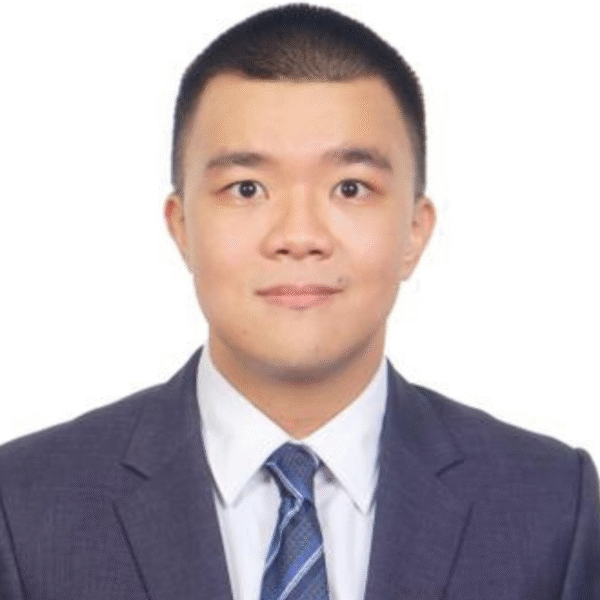
HREE SAMUDRA

HREE SAMUDRA

Strategic Risk Reduction Fellow, Asia-Pacific Leadership Network (APLN)
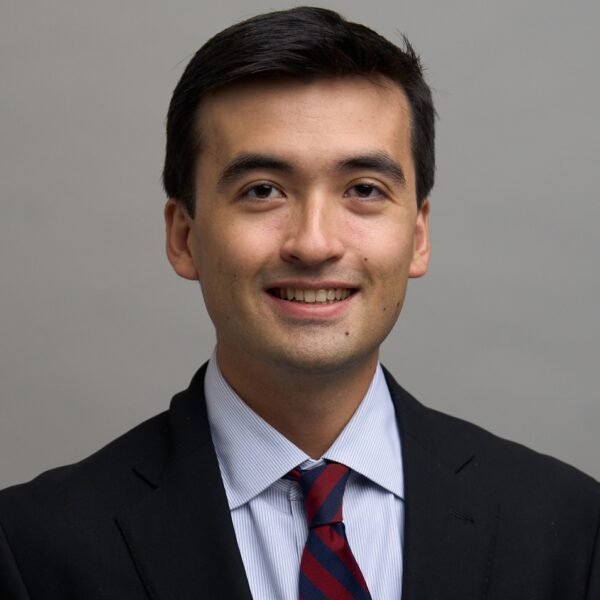
HIEN DO

HIEN DO

Researcher, South China Sea (East Sea) Institute, Diplomatic Academy of Vietnam (DAV), Ministry of Foreign Affairs
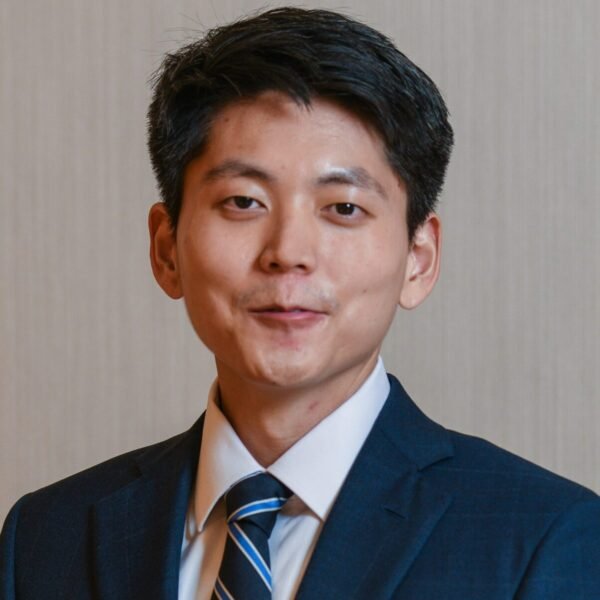
TRYSTANTO SANJAYA

TRYSTANTO SANJAYA

Visiting Fellow, Norwegian Institute of International Affairs
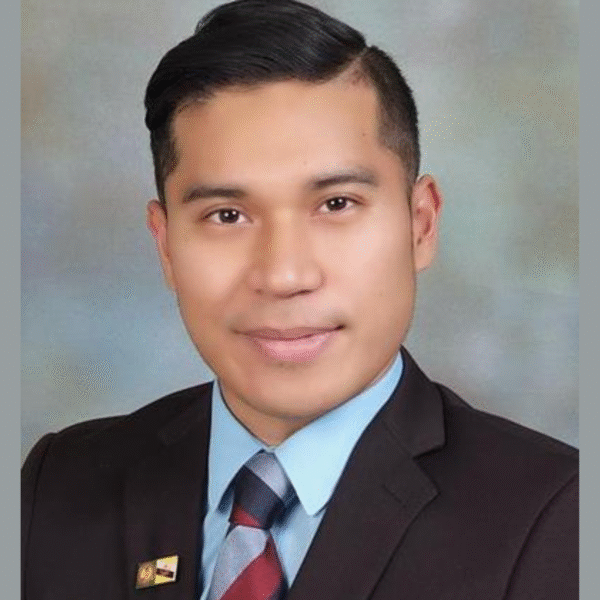
ANH MINH PHAM

ANH MINH PHAM

Student, Diplomatic Academy of Viet Nam
EERISHIKA PANKAJ

EERISHIKA PANKAJ

Director, Organisation for Research on China and Asia
JIMMY QUINN

JIMMY QUINN

J.D. Candidate, Columbia Law School
SASHA MATHIEU

SASHA MATHIEU

Master's Student; Analyst, University of Calgary; Innovation, Science and Economic Development (ISED) Canada
KANGKYU LEE

KANGKYU LEE

Deputy Director for Technology and Geopolitics in Asia, Institute for Security and Technology; Georgia Institute of Technology
AZIM KASSIM

AZIM KASSIM

Research Officer, Directorate of Defence Policy, Ministry of Defence
WILLIAM J. LIFFICK

WILLIAM J. LIFFICK

CEO, Littoral Dynamics LLC
INDIGO ATKINSON

INDIGO ATKINSON

CEO, Global Voices, Australia
MAYA SOBCHUK

MAYA SOBCHUK

Researcher, Economic Security Intelligence Lab, Research Center for Advanced Science and Technology, University of Tokyo
MARHARYTA BLYZNIUK

MARHARYTA BLYZNIUK

PhD candidate/ Project Coordinator, University of Warsaw/School of Leadership Foundation
PHANTITRA PHUPHAPHANTAKARN

PHANTITRA PHUPHAPHANTAKARN

Policy Fellow, Asia-Pacific Leadership Network (APLN)
PATTEERA SIRICHARUANUN

PATTEERA SIRICHARUANUN

Plan and Policy Analyst Officer, Institute of Security Studies, Office of the National Security Council Thailand
ATTY. CZARINA V. PACIS

ATTY. CZARINA V. PACIS

Solicitor, Office Of The Solicitor General, Philippines
ALYSSA GO

ALYSSA GO

Lecturer, Ateneo de Manila University
HONG VIN OAY

HONG VIN OAY

Project Coordinator, Kolaxus
NABITA HUSSAIN

NABITA HUSSAIN

Director, Government Affairs and Public Policy, Microsoft Malaysia
YUICHI YOSHIDA

YUICHI YOSHIDA

LEAP Fellow, International House of Japan/Asan Institute of Policy Studies
SOICHIRO TEZUKA

SOICHIRO TEZUKA

Master's Student, Graduate School of Media and Governance, Keio University

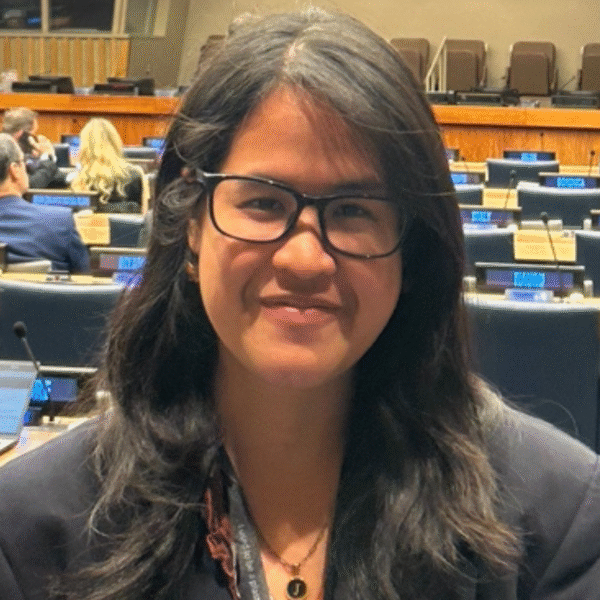
HREE SAMUDRA

Strategic Risk Reduction Fellow, Asia-Pacific Leadership Network (APLN)

Hree P. Samudra is an Indonesian policy researcher working at the intersection of strategic risk reduction, military artificial intelligence, nuclear policy, and Indo-Pacific security. She has served as a Strategic Risk Reduction Fellow at the Asia-Pacific Leadership Network (APLN) and as a CTBTO Research Fellow, contributing to work on nuclear risk reduction, verification, China-US strategic competition, and regional security cooperation. Hree chairs Working Group 1 of the 2026–2027 Assembling Peace Through Dialogue initiative, a collaborative project involving BASIC, RECNA, and HOPE. In this role, she leads cross-regional research on how the memory and consequences of atomic bombing are transmitted across generations and regions. She also serves as Global Projects and Regional Engagement Coordinator on the CTBTO Youth Group Steering Committee. Selected for the second Hague Code of Conduct Youth Group, an international EU-supported initiative convened by the Fondation pour la Recherche Stratégique (FRS), Hree is developing research on how AI-enabled open-source monitoring and commercial satellite imagery could strengthen missile transparency and pre-launch notification. She is also an Erasmus Mundus scholar in the International Master in Security, Intelligence and Strategic Studies, studying across the University of Glasgow, the University of Trento, and Charles University. Her broader research examines how emerging technologies affect crisis stability, verification, human accountability, and regional security governance in the Indo-Pacific.

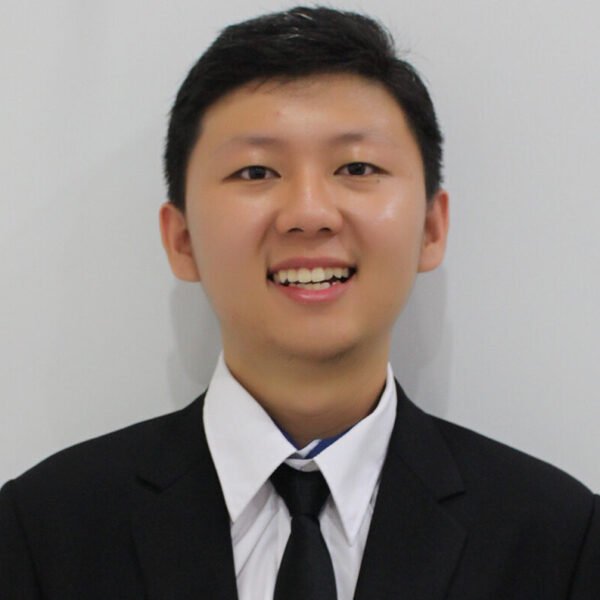
HIEN DO

Researcher, South China Sea (East Sea) Institute, Diplomatic Academy of Vietnam (DAV), Ministry of Foreign Affairs

Do Thi Thu Hien is a researcher at the South China Sea (East Sea) Institute, Diplomatic Academy of Vietnam (DAV), Ministry of Foreign Affairs. Her research examines the South China Sea through a multi-layered lens, focusing on how historical narratives, contemporary geopolitics, domestic politics, and competing interpretations of ASEAN centrality shape the dispute and regional responses. In the past 2 years, she has been working on building a complete chronological and historical state-level study of the South China Sea dispute history, supported by the Ministry of Foreign Affairs. Her research has also been presented at international academic forums. In October 2025, Hien received full sponsorship to present her study on the normative contestation of ASEAN Centrality in the South China Sea at the Centre on Asia and Globalisation, Lee Kuan Yew School of Public Policy, National University of Singapore. In 2025, she was also selected by the U.S. Department of State for the International Visitor Leadership Program on maritime policy and security coordination in the South China Sea. Additionally, Hien is committed to advancing international collaboration and dialogue on the South China Sea. She served as Secretary of the South China Sea International Conference organized by DAV in 2024 and 2025. Currently, she serves as Chief Manager of the Young Leaders Network on South China Sea Studies, helping connect emerging scholars and practitioners across the region. Her broader interests include ASEAN crisis-response mechanisms, energy security during maritime crises, and human-centred approaches to regional maritime stability.

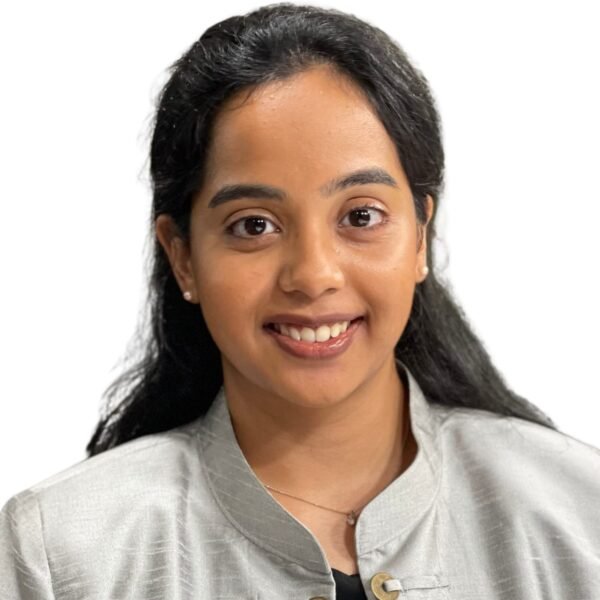
TRYSTANTO SANJAYA

Visiting Fellow, Norwegian Institute of International Affairs

The Problem: Regional attention to the South China Sea overwhelmingly focuses on China-claimant friction, leaving a quieter but recurring problem unaddressed: enforcement clashes among Southeast Asian claimant states themselves. Overlapping and undelimited EEZ boundaries mean fishing vessels routinely cross into contested waters, and enforcement responses (arrests, vessel seizures, occasionally live fire, as seen in a few Indonesia-Vietnam incidents) are inconsistent and ad hoc, with no shared standard or notification mechanism between claimants. The Stakes: Left unaddressed, these incidents erode trust precisely among the states that most need a unified position toward Beijing, fracturing ASEAN cohesion from within rather than from external pressure. Detained fishermen can become recurring diplomatic flashpoints, and the absence of predictable rules raises the risk that a routine enforcement encounter escalates into a genuine bilateral crisis. The Policy Idea: An intra-Southeast Asian Code of Conduct governing fishing vessel and coast guard interactions among claimant states—featuring graduated enforcement protocols before arrest, a coast guard-to-coast guard hotline, a joint incident review mechanism, and fishermen welfare standards. Explicitly "without prejudice" to unresolved boundaries, it builds on existing bilateral MOUs, multilateralizing them into a standing, ASEAN-anchored framework that strengthens claimant unity ahead of the wider ASEAN-China COC.

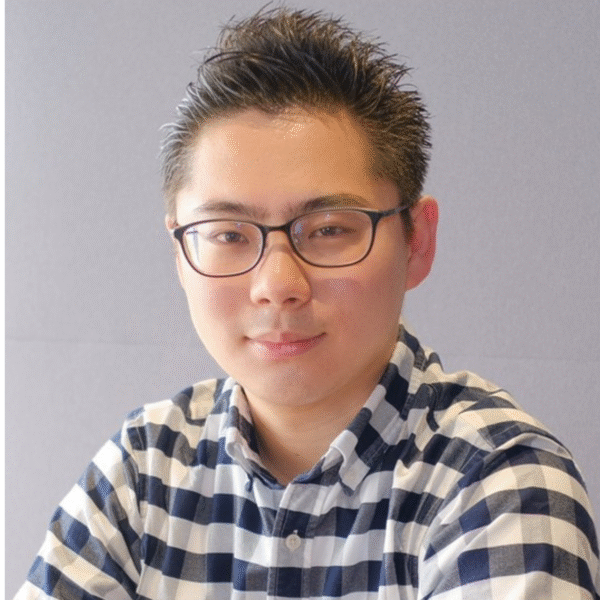
ANH MINH PHAM

Student, Diplomatic Academy of Viet Nam

I am a fourth-year International Law student at the Diplomatic Academy of Viet Nam with a strong academic interest in international legal affairs and contemporary global issues. I have developed a solid academic foundation in International Law while maintaining a strong ability to communicate and work effectively in English. My academic interests focus particularly on international humanitarian law, international dispute resolution, and emerging legal issues arising from cross-border developments. I have actively engaged in scientific research and academic conferences, with research achievements including a publication in the ALSA Journal of Legal Studies, contributions to conference proceedings, and a research presentation at the Fourth Scientific Research Conference on International Law hosted by the Diplomatic Academy of Viet Nam. Beyond academic research, I have gained practical exposure to international legal issues through moot court competitions, including participation in the Southeast Asia Regional Round of the Stetson International Environmental Moot Court Competition. Furthermore, I have attended the national round of the International Humanitarian Law Moot Court Competition as the Head of the Event Department. These experiences have strengthened my legal research, analytical, advocacy, teamwork, and public-speaking skills. I have also been actively involved in academic and student organizations, including ALSA Viet Nam and the International Law Faculty’s Association for Student Activities, where I served as Head of the Event Department. Through these experiences, I have developed strong interpersonal and organizational skills and become comfortable working in multicultural and English-speaking academic environments.

EERISHIKA PANKAJ

Director, Organisation for Research on China and Asia

Eerishika Pankaj is the Director of New Delhi based think-tank, the Organisation for Research on China and Asia (ORCA), which focuses on decoding domestic Chinese politics and its impact on Beijing’s foreign policymaking. She is also the Convenor of ORCA's Global Conference on New Sinology (GCNS), which is India's premier dialogue driven China conference and South Asia's largest gathering of Sinologists. She is also an Editorial and Research Assistant to the Series Editor for Routledge Series on Think Asia; a Young Leader in the 2020 cohort of the Pacific Forum’s Young Leaders Program; a Commissioning Editor with E-International Relations for their Political Economy section; a Member of the Indo-Pacific Circle and a Council Member of the WICCI’s India-EU Business Council. In 2023, she was selected as an Emerging Quad Think Tank Leader, an initiative of the U.S. State Department’s Leaders Lead on Demand program. She was recognised as a youth icon on India’s first 25 under 25 List for policy and politics in 2022 by Young India Foundation.

JIMMY QUINN

J.D. Candidate, Columbia Law School

Jimmy Quinn is a student at Columbia Law School and former national security correspondent for National Review, a national U.S. political magazine. As a reporter, he broke exclusive stories on China’s united front influence campaigns in the United States. Among other things, those stories exposed the Chinese government’s pressure to get the New York City mayor to snub Taiwan’s president and a Congressional staffer’s secret lobbying for China’s embassy. His scoops have been cited widely, including by The New York Times, the House Select Committee on the Chinese Communist Party, and the U.S.-China Economic and Security Review Commission. He has appeared on conference panels, television shows, and podcasts to discuss his reporting. He interviewed the U.S. Secretary of State, the prime minister of Denmark, and numerous ministerial-level officials. He was awarded a Novak Fellowship with The Fund for American Studies for an investigative journalism project focused on the CCP’s united front. At Columbia Law School, he sits on the boards of the National Security Law Society and the Federalist Society. He is also a staff editor with the Columbia Journal of Transnational Law. Jimmy spent the summer after his first year of law school interning with the U.S. Department of Justice’s Money Laundering, Narcotics, and Forfeiture Section. He is a participant in the Council on Foreign Relations’s Young Professionals Briefing Series and a member of the Alexander Hamilton Society’s New York Professional Chapter. He graduated from Columbia University, summa cum laude, and Sciences Po through the schools’ Dual BA program.

SASHA MATHIEU

Master's Student; Analyst, University of Calgary; Innovation, Science and Economic Development (ISED) Canada

Sasha Mathieu is a master’s student in Strategic Studies at the University of Calgary, where her research focuses on maritime security, critical undersea infrastructure (CUI), and the governance and resilience of undersea cables in contested environments. A recipient of the Canada Graduate Scholarship, the Department of National Defence’s MINDS Supplement, and the Arthur J. E. Child Master’s Scholarship, her research examines how states and regional institutions can strengthen the protection, repair, and resilience of critical maritime infrastructure amid growing geopolitical competition. She is the winner of the 2026 European Commission Schuman Challenge and the 2026 Global Affairs Canada International Policy Ideas Challenge, where her work examined CUI resilience through comparative case studies of the Baltic Sea and Taiwan Strait. Her recent research has also explored the factors affecting undersea cable restoration timelines across cases in Europe, the Indo-Pacific, and the Middle East. Professionally, Sasha has worked across several Government of Canada departments, including Innovation, Science and Economic Development Canada and Fisheries and Oceans Canada, contributing to policy and strategic analysis on science diplomacy, defence and security, and international oceans policy. She is also a Junior Fellow with Arctic360 and has held multiple student leadership roles, including with the Strategic Studies Students’ Consortium, where she was awarded a Department of National Defence grant for a proposal examining the future of Canada-United States defence relations from a youth perspective. Sasha previously graduated as valedictorian from the University of Ottawa with an Honours bachelor’s degree in International Studies and Modern Languages.

KANGKYU LEE

Deputy Director for Technology and Geopolitics in Asia, Institute for Security and Technology; Georgia Institute of Technology

Kangkyu Lee is Deputy Director for Technology and Geopolitics in Asia at the Institute for Security and Technology, a nonpartisan nonprofit based in the San Francisco Bay Area, where he leads the institute's Asia program on semiconductors, artificial intelligence, and allied technology cooperation. In July 2026 he led IST's inaugural executive delegation to Taiwan, bringing former senior U.S. government officials, investors, and technology executives to Taipei and Hsinchu for a week of engagements on U.S.-Taiwan technology cooperation, and he is preparing the program's second delegation for October alongside a planned Track 1.5 dialogue on technology governance. He is a PhD candidate at Georgia Tech's Sam Nunn School of International Affairs, defending this winter, with a dissertation on why operational cyber cooperation among Indo-Pacific treaty allies remains shallow despite intensifying shared threats. His prior affiliations include Pacific Forum, where he was a Korea Foundation Fellow, the Harvard Belfer Center's North Korea Cyber Working Group, the RAND Corporation, the CSIS Korea Chair, the East-West Center, and the Berggruen Institute China Center, and his Track 2 experience includes U.S.-China formats conducted partly in Mandarin. His writing has appeared in NK Pro, with scholarly work forthcoming in International Studies Quarterly. He holds master's degrees from Georgetown University, Peking University's Yenching Academy, where he was a Yenching Scholar and Bai Xian Fellow, and the Georgia Institute of Technology, and he works professionally in Korean, Japanese, and Mandarin.

AZIM KASSIM

Research Officer, Directorate of Defence Policy, Ministry of Defence

Azim Kassim is a research officer at the Directorate of Defence Policy, Ministry of Defence, with an extensive experience in bilateral and regional defence diplomacy including under the ambit of the ASEAN Defence Ministers' Meeting (ADMM) particularly in drafting and subsequently moderating the working-level discussions to reach a consensus on the Bandar Seri Begawan ADMM and ADMM-Plus Joint Declarations in 2021. His multilateralism portfolio includes being representing his beloved nation as the First Committee delegate at the United Nations General Assembly (UNGA) in 2020 and 2021. He holds Master's Degree in Security, Terrorism and Insurgency from the University of Leeds sponsored through the United Kingdom's Chevening Scholarship award as well as bachelor's degree in Politics and International Relations from the United Kingdom.

WILLIAM J. LIFFICK

CEO, Littoral Dynamics LLC

William Liffick is a former U.S. Coast Guard officer with decades of regional maritime security expertise spanning the Indo-Pacific and littoral zones. He is a Naval War College graduate and holds a Master of Arts in International Relations and Global Security and a Masters Certificate in Homeland Security from Texas A&M University, he brings both academic rigor and operational depth to critical challenges in Southeast Asian waters. William has developed courses for the NATO School Oberammergau and advised NATOs Irregular Warfare Group, applying this coalition expertise to the complex maritime dynamics of the South China Sea region. He has instructed forces across thirty plus nations, delivering the Distinguished Lecture at the NATO Special Operations Forces Conference on Counterterrorism in Turkey while maintaining focus on Indo-Pacific stability. As a Lead Instructor for the UN Office on Drugs and Crime in South East Asia, he advanced regional capacity building and maritime domain awareness throughout the region. William addressed the Southeast Asia Maritime Law Enforcement Initiative Commanders Forum in the Philippines and has published research on law enforcement roles in Indo-Pacific security and South China Sea stability. As Founder of Littoral Dynamics LLC, he provides strategic training on maritime security, hybrid threats in regional waters, transnational crime, and All Source Intelligence methodologies tailored to littoral states. A veteran of extensive coalition operations and former Deputy Director of Intelligence for a multinational intelligence center, William bridges operational expertise with strategic education to advance rules based maritime order and regional cooperation across the Indo-Pacific.

INDIGO ATKINSON

CEO, Global Voices, Australia

As an emerging researcher and policy professional with forthcoming publications on the maritime governance and security dynamics of the South China Sea, Indigo examines how shifting state identities constrain and enable regional security complexes. Her career began on commercial fishing vessels in Australia and Aotearoa New Zealand, and she retains a particular interest in transboundary fisheries and the regional governance mechanisms and negotiations that shape the management of Indo-Pacific fisheries. In parallel, Indigo has held the role of COO and CEO of an NGO called Global Voices. In these roles, she trained outstanding young Australians in policy and diplomacy through the Global Voices flagship policy fellowship. Global Voices sends young Australians to international multilateral fora such as Globsec, the climate COPs, the Y20 and the UNGA 6th committee. This experience has underscored both her belief in international cooperation and the necessity to upskill and uplift civil society groups in policy-making to retain their buy-in of multilateral decision making in international relations.

MAYA SOBCHUK

Researcher, Economic Security Intelligence Lab, Research Center for Advanced Science and Technology, University of Tokyo

Maya Sobchuk is a Ukraine-born, US-raised, Tokyo-based researcher at the University of Tokyo's Research Center for Advanced Science and Technology (RCAST), affiliated with the Economic Security Intelligence Lab. She also holds fellowships within the AI and Global Governance Program at the Global Governance Institute in Brussels, Keio University's Graduate School of Media Design in Tokyo, and Cyfluence Research Center in Berlin. She heads Pacific Forum's Tokyo Young Leaders chapter and represented Japan at last year's G7 in Canada, advising on hostile information operations and cyber issues. Her research examines cognitive warfare and coordinated Russia-China narrative operations across the Indo-Pacific. In a recent project with Ukrainian AI startup LetsData, she mapped foreign information campaigns targeting Japan's Okinawa gubernatorial election, tracing how narrative operations unfold around a strategically sensitive region. She frequently advises government and private-sector clients on narrative intelligence, drawing on an academic background in influence operations to build practical early-warning capacity against hybrid threats.

MARHARYTA BLYZNIUK

PhD candidate/ Project Coordinator, University of Warsaw/School of Leadership Foundation

Marharyta Blyzniuk is an international relations professional and Project Coordinator in the Political Leadership Program at the Zbigniew Pełczyński School of Leadership Foundation. She has five years of experience in program management, policy analysis, and stakeholder engagement, including her previous role as Senior Program Associate at the International Republican Institute, where she supported democracy and leadership initiatives across Central and Eastern Europe. She holds a Master’s degree in International Relations from the University of Warsaw and a Bachelor’s degree in European Studies from the University of Wrocław. Currently, she is pursuing a PhD in Security Studies at the University of Warsaw, focusing on Ukraine’s Western alignment. She is a published researcher, multilingual professional, and member of WIIS Poland.

PHANTITRA PHUPHAPHANTAKARN

Policy Fellow, Asia-Pacific Leadership Network (APLN)

Ariel (Phantitra) Phuphaphantakarn is a Policy Fellow at the Asia-Pacific Leadership Network (APLN). She holds an MA in Nonproliferation and Terrorism Studies from the Middlebury Institute of International Studies (MIIS), where her thesis examined AI-integrated nuclear deterrence, with a focus on strategic behaviour and perceptions in the U.S.-China relationship. She was previously a Nuclear Scholar (NSI) with CSIS Project on Nuclear Issues (PONI), and a Graduate Research Assistant and Visiting Scholar at the James Martin Center for Nonproliferation Studies (CNS), where she also served as an IAEA Marie Skłodowska-Curie Fellow. Ariel has held research fellowships with NEREC-KAIST, CENESS-CTBTO, and Pacific Forum. Her research through these programmes has focused on undersea nuclear deterrence, escalation management, and sub-ocean technologies. Ariel also works on disruptive technologies, including the intersection of quantum technologies and AI, as well as negotiation and arms control. She is a Fellow of the Arms Control Negotiation Academy (ACONA) and is involved in the Oral History Project, a collaboration between the Stanley Center for Peace and Security and BASIC. Ariel’s work examines how trust, strategic behaviour, and international cooperation are shaped in technologically mediated environments. Her areas of expertise include technology and conflict, nuclear threat perception, bargaining and decision theory, and human-machine relations.

PATTEERA SIRICHARUANUN

Plan and Policy Analyst Officer, Institute of Security Studies, Office of the National Security Council Thailand

Patteera Siricharuanun is a Plan and Policy Analyst Officer at the Institute of Security Studies, Office of the National Security Council of Thailand, where she conducts policy research and strategic analysis on national, regional, and global security issues. She holds a Bachelor of Laws from Thammasat University, which has shaped her interest in international law, maritime disputes, and the rules-based international order. Her professional work covers maritime security, border management, transnational crime, migration, and emerging regional security challenges. She has a particular research interest in the South China Sea, including maritime disputes, UNCLOS, and the implications of grey-zone activities for regional stability. Through her work, she contributes to policy analysis and recommendations on security developments affecting Thailand and the wider Indo-Pacific. She is particularly interested in exploring how ASEAN can strengthen dialogue, confidence-building, and practical cooperation to manage maritime disputes and emerging security challenges.

ATTY. CZARINA V. PACIS

Solicitor, Office Of The Solicitor General, Philippines

Atty. Czarina Maybellyne V. Pacis is a Solicitor at the Office of the Solicitor General of the Philippines. She represents the Republic of the Philippines in legal proceedings involving the State. She also serves as a member of the Junior Secretariat providing direct legal support to the Solicitor General.Formerly, Czarina served as a Court Attorney (Law Clerk) of the Supreme Court of the Philippines in which she provided extensive legal research and analysis on constitutional and international law matters.Apart from government service, Czarina also teaches Public International Law and Constitutional Law at San Beda University.Czarina graduated Class Valedictorian of San Beda University and recipient of the Most Outstanding Law Graduate Award, Justice Florenz Regalado Memorial Award, and the Dean’s Award. She likewise earned her Bachelor of Science in Legal Management, cum laude, from the Ateneo de Manila University. She was also the Class Valedictorian in grade school and high school.Czarina co-authored the Philippine Law Journal article, “An Untrammeled Chief Architect: Examining the Binding Effect of the so-called ‘Gentleman’s Agreement’ between the Philippines and China vis-à-vis the President’s Treaty-Making Powers,” which examines the constitutional and international law implications of the West Philippine Sea dispute. The Article was conferred the 2025 OSG Best Publication Award.Czarina is a Fellow from the United Nations Regional Courses in International Law, and alumna of Philippine International Law of the Sea Academy and Hague Academy of International Law. She was recently accepted in the Yeosu Academy of the Law of the Sea.

ALYSSA GO

Lecturer, Ateneo de Manila University

Alyssa Go graduated Magna Cum Laude from the University of the Philippines, where she majored in Business Administration. She was awarded the Leadership Service Award at the Cesar Virata School of Business and got inducted to the Pi Gamma Mu International Honor Society of Social Sciences. She then took her Master’s in China Studies, with a focus on Philosophy, from the Yenching Academy of Peking University. During her stay in Beijing as a Yenching Scholar, she was also awarded the Bai Xian Asia Future Leaders Scholarship. She attended the St. Gallen Symposium in Switzerland as a Leader of Tomorrow with her essay ranking as part of the top 25 globally in the University of St. Gallen’s Essay Competition. Currently, she teaches China’s Foreign Policy and Chinese Philosophy at Ateneo de Manila University’s Dr. Rosita G. Leong School of Social Sciences.

HONG VIN OAY

Project Coordinator, Kolaxus

Koay Hong Vin is a Malaysian technology professional, researcher, and innovation ecosystem builder with a background spanning artificial intelligence, risk modelling, and technology-driven community initiatives. He currently works as a Risk Modelling and Data Scientist at Ant International, where he develops AI and LLM-based solutions to improve risk decision-making and automate manual verification processes. Beyond his corporate role, Hong Vin is actively involved in building innovation communities and coordinating hackathons and competitions in Malaysia, working with universities, industry partners, and technology communities to create platforms for young people to develop and exchange innovative ideas. He is currently involved with Kolaxus, contributing to technology and innovation initiatives that bring together diverse stakeholders across Malaysia. Hong Vin holds a PhD in Engineering from the Universiti Malaya, where his research focused on machine learning and computer vision for intelligent transportation and driver safety. He has also been involved in international academic collaboration, including as a visiting scholar with Tsinghua University. His work and interests sit at the intersection of technology, research, and innovation, with a particular focus on turning emerging technologies and ideas into practical applications.

NABITA HUSSAIN

Director, Government Affairs and Public Policy, Microsoft Malaysia

Nabila Hussain is Director of Government Affairs and Public Policy at Microsoft Malaysia and the Philippines, within the ASEAN Corporate, External and Legal Affairs team. She works at the intersection of technology, policy, and society, partnering with governments, industry associations, academia and civil society to develop digital regulations that promote secure, reliable, and inclusive technology ecosystems. Her areas of expertise include technology policy, digital infrastructure, data governance, cybersecurity and artificial intelligence, with a focus on skills development and emerging technologies shaping the future of work. She is a strong advocate for digital inclusion, accessibility and inclusive design. Outside of her role at Microsoft, Nabila serves as Chairperson of Architects of Diversity Malaysia, a youth-led nonprofit advancing racial and religious cohesion. Nabila previously led Southeast Asia public policy at Cloudflare, and established the technology policy division at the Social & Economic Research Initiative. She also led public affairs at Micron Technology (Malaysia). She holds an LL.B from SOAS, University of London, and an LL.M in Intellectual Property and Information Law from King’s College London.

YUICHI YOSHIDA

LEAP Fellow, International House of Japan/Asan Institute of Policy Studies

Yuichi Yoshida is the inaugural LEAP (Leaders in East Asia for Peace) Fellow at the International House of Japan (I-House). Through the fellowship, he is based at the Asan Institute for Policy Studies in the Republic of Korea. He specialises in Indo-Pacific security. He is particularly interested in naval strategy for small navies, including sea-denial operations and deterrence by detection. At I-House, he examines the security implications of emerging technologies, particularly artificial intelligence and drones; at Asan, his work centres on Japan–South Korea relations and Japan–US–South Korea security cooperation. His current projects include an Asan report chapter comparing regional responses to China’s maritime expansion, commentaries on artificial intelligence for I-House, and research on satellite- and drone-based intelligence, surveillance and reconnaissance (ISR) architectures for trilateral security cooperation. Previously, as a Research Fellow at the Japan Institute of International Affairs (JIIA), he worked on Indo-Pacific security and emerging technologies. He planned, organised and participated in Track 1.5 and Track 2 dialogues with regional counterparts, including Japan–India, Japan–Singapore and Japan–India–Viet Nam Track 1.5 dialogues. At a 2024 SIPRI–JIIA workshop, he presented on Philippine security in a potential Taiwan contingency, examining the deterrent benefits and escalation risks of deeper regional security partnerships. Earlier, he served in the Political Section of the Embassy of Japan in Bulgaria, covering diplomacy, defence and energy security. He holds an MSc in EU Politics from the London School of Economics and Political Science and a bachelor’s degree in Policy Management from Keio University.

SOICHIRO TEZUKA

Master's Student, Graduate School of Media and Governance, Keio University

Soichiro Tezuka is a master’s student at the Graduate School of Media and Governance, Keio University, and an exchange research student at the Research Center for Advanced Science and Technology (RCAST), The University of Tokyo. His research focuses on international security, NATO’s engagement in the Indo-Pacific, and the growing strategic linkages between European and Indo-Pacific security. His current work examines how NATO allocates attention and resources across competing regional priorities and how it engages Indo-Pacific partners without relying on large-scale military deployments. He is also interested in economic security, maritime security, and gray-zone challenges. Through academic research and policy dialogue, he has examined how capacity building, institutional cooperation, and partnerships can strengthen deterrence and resilience. He has also participated in the Japan-America Student Conference (JASC), where he engaged in policy dialogue on international politics and security with students, experts, and practitioners from Japan and the United States. His broader goal is to connect lessons from Euro-Atlantic security cooperation with practical policy options for strengthening a rules-based, stable, and resilient Indo-Pacific regional order.